YINstitute Info →
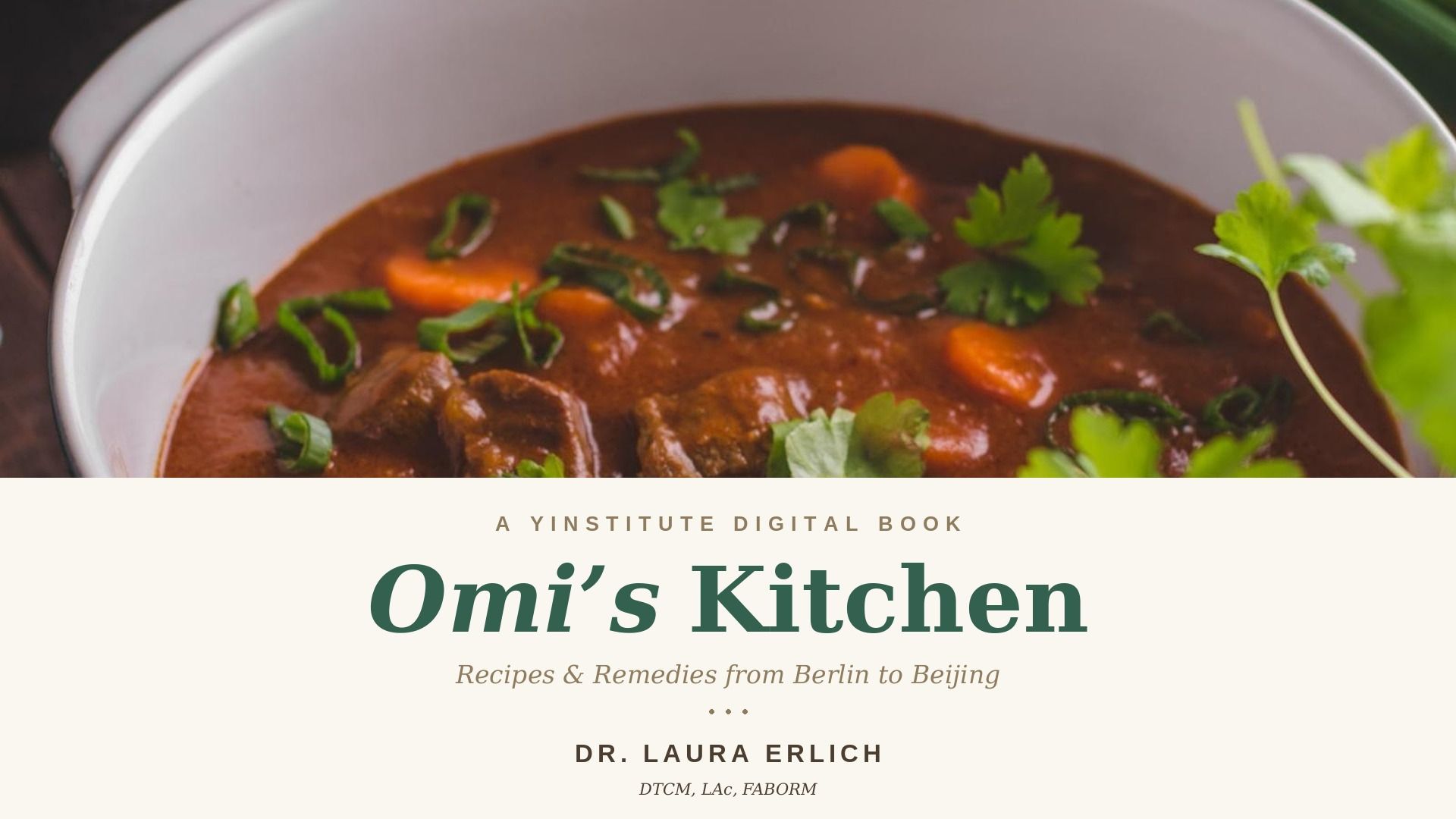
A TCM doctor's cookbook of grandmother medicine — where European peasant kitchens and Chinese medicine speak the same language. Get instant access now!
Add to Cart
A Book Born in the Kitchen
When I was six years old, my father was diagnosed with Hodgkin's disease. In those years, I watched my mother feed him green concoctions he hated, while my Omi cooked for our whole family in the way she'd always cooked — slow soups, red cabbage with apples, beef goulash, lentil soup with a splash of good vinegar — and I learned, before I had words for any of it, that food could be used to help someone get better.
My father lived for fifteen years against the odds. He didn't live to see me become a doctor, but his plight imprinted on me forever, and the kitchen has felt like a place of consequence to me ever since.
Omi's Kitchen is the book that twenty-five years of clinical practice in Traditional Chinese Medicine eventually became. It's the synthesis of two things I have spent a lifetime learning to hold together: the European peasant cooking I grew up eating in my grandmother's kitchen, and the deep, ancient, food-as-medicine framework of Chinese medicine I now practice every day. They turn out to be speaking the same language.
This book is a small act of remembering.
What you'll find inside
Eighty-plus recipes drawn from a quarter-century of clinical practice, organized into six parts:
-
Stocking Your Kitchen Apothecary — the Chinese pantry, the European pantry, and the surprisingly small overlap that runs both
-
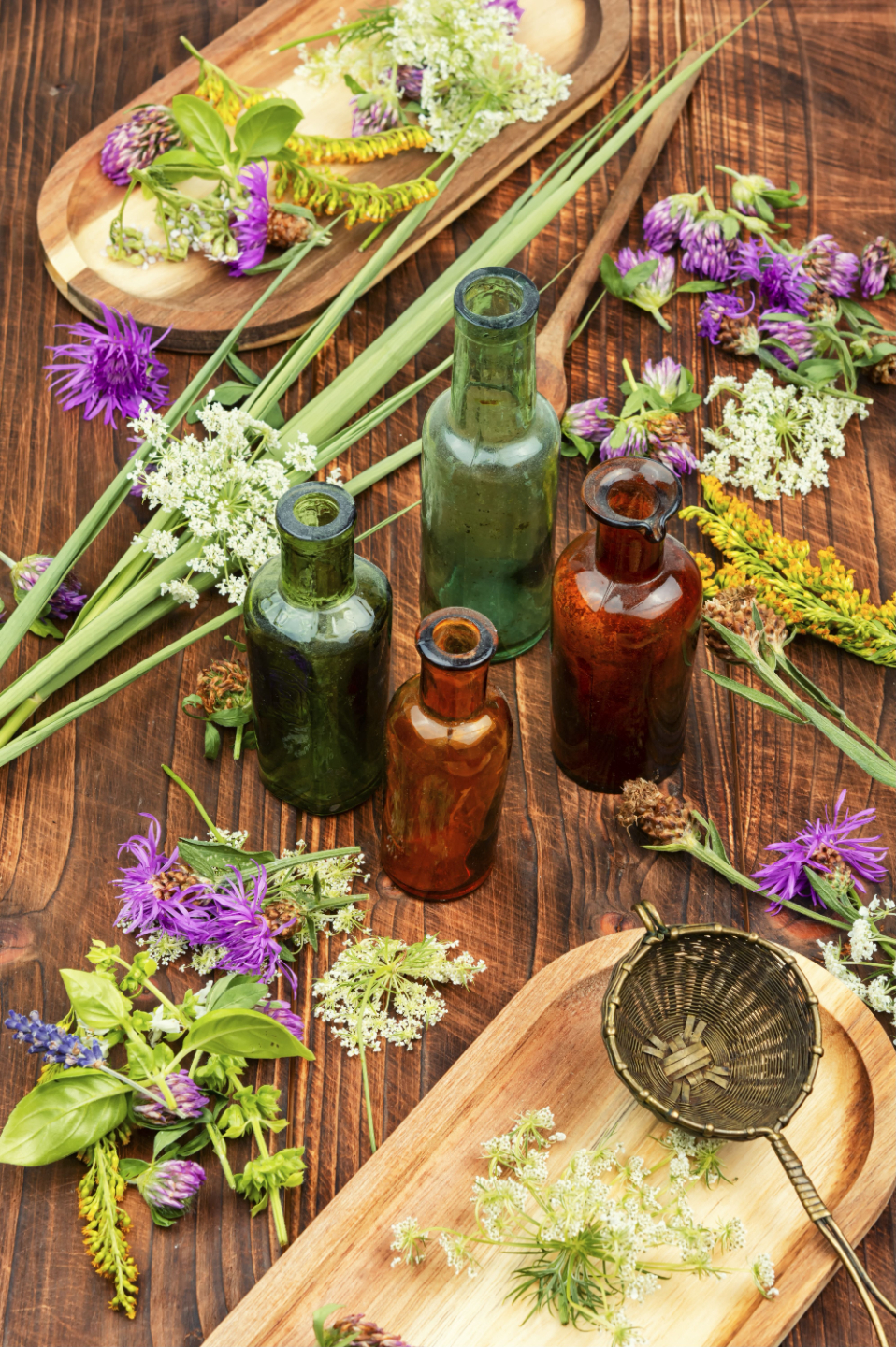
Teas, Tonics & Decoctions — Da Zao tea for blood deficiency, Reishi & Cocoa for the woman who can't stop thinking, Fire Cider for the run-down feeling at the start of winter
-
Soups, Congees & Healing Broths — Polish rosół, Master Bone Broth, Ginger Chicken Congee for depleted digestion
-
Sweet Medicine — stewed pears for chronic cough, raspberry-honey shrub for heavy cycles, Golden Milk for inflammation
-
Remedies for Common Complaints — what to reach for when sleep won't come, when the throat starts to scratch, when the cycle is heavy, when the body needs to be rebuilt after illness
-
The Home Apothecary Toolkit — foot soaks, medicinal baths, moxa at home, a cleaner beauty shelf
Every recipe includes the Best for — what the dish does, in plain language. Heritage Notes throughout show how the same medicine appears in German, Polish, Russian, Chinese, Ayurvedic, and Mediterranean kitchens. Cautions where they matter. Nothing fancy. Nothing hard. Right from your phone or laptop, anytime you need it.
I N T R O D U C I N G
Who This Is For
Omi's Kitchen was written for —
-
The woman navigating cycles, fertility, perimenopause, postpartum, or the slow exhaustion modern life produces in women's bodies
-
Anyone who has been told their labs are fine but knows their body isn't
-
The home cook who wants to feed her family well and doesn't know where to start
-
The practitioner who wants a beautiful, clinical yet accessible cookbook to recommend to her own patients
-
Anyone who suspects their grandmother knew something their doctor doesn't
Get Omi's KitchenIf you have ever stood in your own kitchen at the end of a long day and thought I wish I knew what to make for someone who feels like this — this ebook is for you.

If you're a woman who wants an even deeper bench of recipes and rituals, the companion book is yours to add for just $8.99!

A traditional Chinese medicine kitchen handbook for women, written by Dr. Laura Erlich
— twenty-five years of clinical wisdom translated into the recipes, remedies, and rituals of an everyday kitchen. From daily tonic teas to ear seeding, gua sha, and bone broths: the slow medicine of grandmothers, made for the woman cooking now.
Meals & medicines for the whole of a woman's year — $8.99
A 71-page printable companion that organizes the recipes in Omi's Kitchen into six short phase-specific chapters: the period, the follicular phase, ovulation, the luteal days, pregnancy, and postpartum. Each with its own medicinal tea and a week-by-week meal plan built around the dishes you already own.
Includes the Six Congees of the Cycle, a phase-by-phase Herb Safety table, and a one-page Quick Start map of the year.
The book is the kitchen. The companion tells you what to cook this week.
[ Add the Companion — $8.99 ]
Dr. Laura Erlich, DTCM, LAc, FABORM
Dr. Laura Erlich is a Doctor of Traditional Chinese Medicine, licensed acupuncturist, and Fellow of the American Board of Oriental Reproductive Medicine. For twenty-five years she has practiced in Los Angeles with a focus on women's health, fertility, pregnancy, and postpartum care, helping thousands of women feel at home in their own bodies again.
She is the founder of The Yinstitute for Women's Medicine and Mother Nurture Wellness, the co-author of Feed Your Fertility, and the developer of The Yin Way — a methodology of slow, attentive, reverent care for the female body. Her work draws equally from the European peasant kitchens of her own heritage — her Omi's German and Polish recipes, her great-grandparents' Russian and Polish folk medicine — and the Chinese medicine traditions she trained in.
She lives in Los Angeles with her husband Sean and her son Sebastian, and her incredible menagerie of dogs and cats, and almost always has a pot of something simmering on the stove.