Your Disease Is Not Your Fault: Why I Teach the Way I Teach
Feb 14, 2026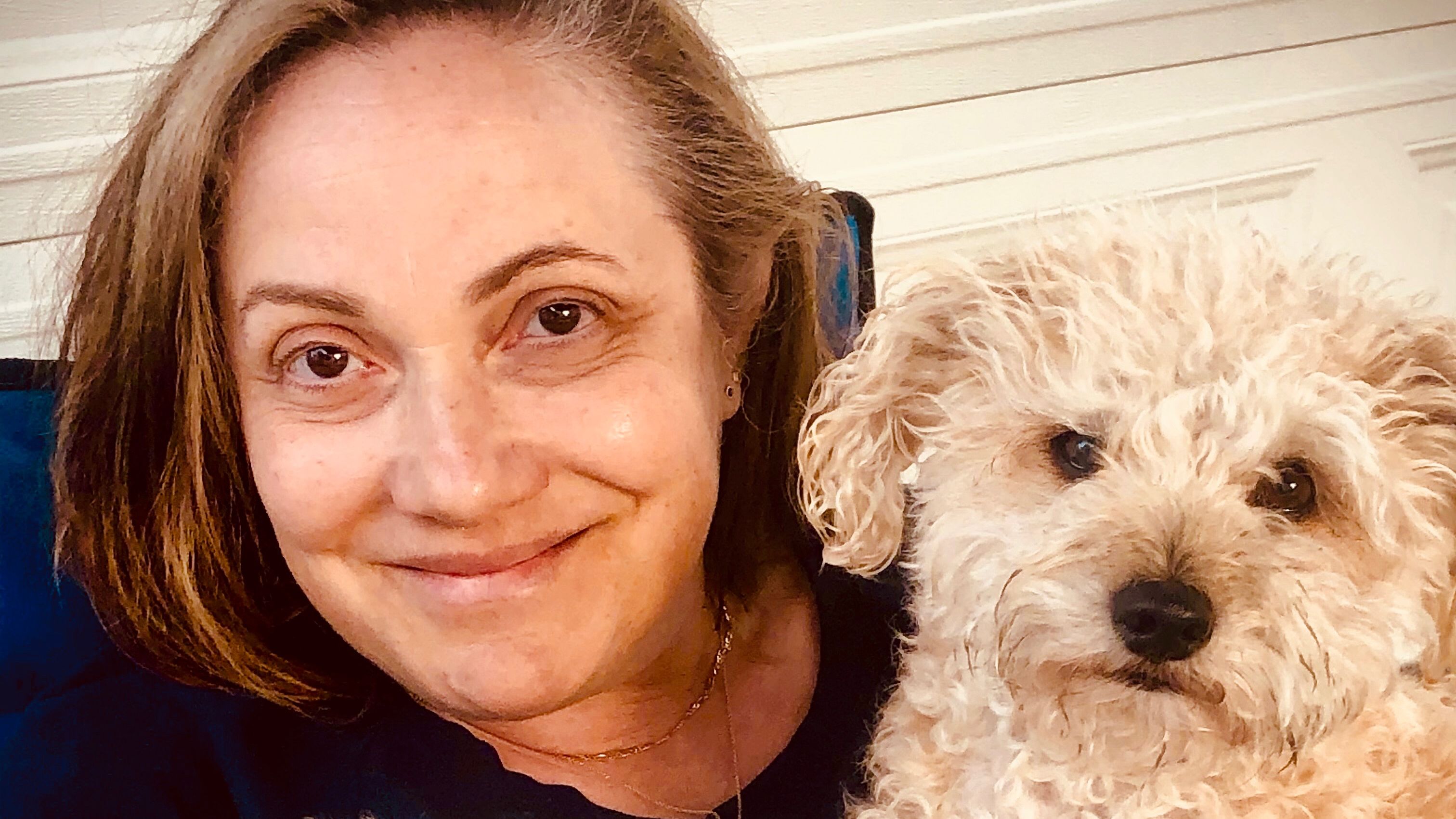
Your Disease Is Not Your Fault: Why I Teach the Way I Teach
Dr. Laura Erlich, DTCM, LAc, FABORM
I received an email this week from a practitioner I had the privilege of mentoring. She wrote to tell me about a continuing education course she'd recently taken from another instructor — a well-respected one — who stated, in a professional teaching environment, that everything that happens to a person, including fertility struggles and cancer, is caused by an emotional issue. "Period."
She was upset. I was upset.
I want to talk about why.
There is a strain of thinking in our field — and in the broader wellness world — that locates the cause of disease squarely inside the patient's psyche. That if you're sick, something in your emotional life created it. That if you can't get pregnant, there's an unresolved feeling blocking conception. That if you develop cancer, your body is expressing something you failed to process.
I find this line of thinking abhorrent. I don't use that word lightly.
I lost both of my parents to cancer. My mother in her forties. My father in his early fifties. I have lived with Charcot-Marie-Tooth disease — a progressive, autosomal recessive neurological condition written into my DNA before I ever took a breath — my whole life. I have spent over two decades sitting with patients navigating infertility, pregnancy loss, and the particular grief of wanting a child and not knowing if it will happen.
Not one of these experiences was caused by an emotional failure.
Here's what I know to be true, both as a clinician and as a human being who has been a patient:
Disease is complex. Infertility is complex. The body is not a punishment system.
Yes, emotions matter. Of course they do. Stress affects the hypothalamic-pituitary-ovarian axis. Grief lives in the body. Unprocessed trauma can dysregulate the nervous system in ways that absolutely affect reproductive function. Chinese medicine has understood the relationship between emotions and physiology for thousands of years — the seven emotions are a foundational part of our diagnostic framework.
But there is a vast difference between saying "emotions are one factor in a complex clinical picture" and saying "your emotions caused your disease. Period."
One is medicine. The other is blame.
The practitioner who wrote to me mentioned something she'd learned in our mentorship together: that endometriosis cells have been found in fetuses. Think about that for a moment. Endometrial-type tissue, present before a person has ever lived a single day outside the womb, before they've experienced a single emotion, before they've had a chance to "fail" at anything.
This is not an emotional issue. This is embryology.
And this is exactly why I teach the way I teach — integrating Western biomedical understanding with Chinese medicine theory, not choosing one over the other. Because when a patient sits across from you and she has endometriosis, or diminished ovarian reserve, or recurrent loss, she deserves a practitioner who understands the biology and the energetics, and who will never, ever look at her and suggest that she did this to herself.
I built The Yinstitute because I believe practitioners deserve better than this. Better than oversimplified frameworks that sound profound in a lecture hall but cause real harm in a treatment room. Better than CEU courses that leave you less equipped to help your patients, not more.
What this practitioner described — a prominent instructor telling a room full of practitioners that disease is emotionally caused, full stop — is not just intellectually lazy. It's dangerous. Because those practitioners go back to their clinics. They sit across from patients. And if they've internalized that framework, even unconsciously, it changes the way they listen. It changes the questions they ask. It changes what the patient feels in the room.
Patients know when you think their suffering is their fault. They feel it. Even if you never say it out loud.
The practitioner who wrote to me also said something that meant more than she probably knows. She said our mentorship together gave her a foundation in both Western and Eastern approaches to fertility that prepared her not just for the ABORM board exam, but for the way she thinks about her patients.
That's what I want for every practitioner who comes through The Yinstitute. Not just information — a way of thinking. Grounded in evidence. Rooted in tradition. And fiercely committed to the principle that our patients are not broken, not at fault, and not to be made wrong for what is happening in their bodies.
If you are a practitioner working in women's health or fertility and you want a clinical home where this is the standard — where we integrate Eastern and Western knowledge without collapsing into either dogma or blame — I'd love for you to join us.
The Yin Commons is our free practitioner community. It's a place to think together, ask clinical questions, and remember what it feels like to have colleagues who share your values. No algorithm. No performance. Just practitioners.
And if you want a taste of how I teach before you commit to anything — I'm giving a free talk on Tuesday, February 17: Yin Medicine for Yang Times: Protecting the Root in the Year of the Fire Horse. Come listen. Come ask questions. See if this feels like home.
Save Your Seat for the Free Talk
If you're ready for deeper work — live teaching, case consultation, herbal training, mentorship, and CEUs that actually make you a better clinician — The Yinstitute is open for enrollment. First class is March 22.
Learn more about Yinstitute Classes
To the practitioner who sent that email: thank you. For your honesty, for your clinical integrity, and for trusting me. I'm glad the mentorship mattered. And congratulations on your own new beginnings — what a beautiful thing.
We take care of each other. That's what we do.
With love,
Laura
The Yin Commons and The Fertility Sanctuary are open!